Essential Equipment for Well Drilling: A Comprehensive Guide
Dec 24, 2025
Introduction to Well Drilling Equipment
Well drilling is a complex operation that demands a variety of specialized equipment to ensure efficiency, safety, and successful borehole completion. The right set of tools can make a significant difference in the productivity of a drilling project, whether it's for water well drilling, mining exploration, or other geotechnical applications. This article will delve into the essential equipment required for well drilling.Drilling Rigs: The Heart of the Operation
Pneumatic Drill Rigs
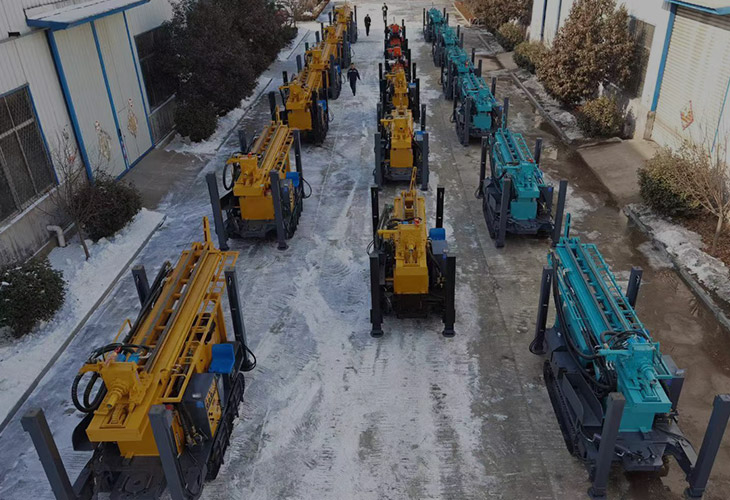
Pneumatic drill rigs offer several advantages that make them popular in the well drilling industry. They are known for their safety and explosion - proof characteristics, which are crucial in environments where flammable gases or substances might be present. These rigs have a large torque, high speed, and come in a compact size with a relatively light weight. Their simple structure enables easy disassembly and assembly, which is beneficial for transportation to different job sites.The rotation of the main machine of a pneumatic drill rig has both forward and reverse functions. This feature allows for easy drilling and pushing out of the drilling tool. They often use an independent motor, which provides a large feed force and has a low failure rate. Additionally, the rotation speed and feed speed can be adjusted by controlling the air intake, giving operators precise control over the drilling process.
Hydraulic Top - Hammer Drill Rigs
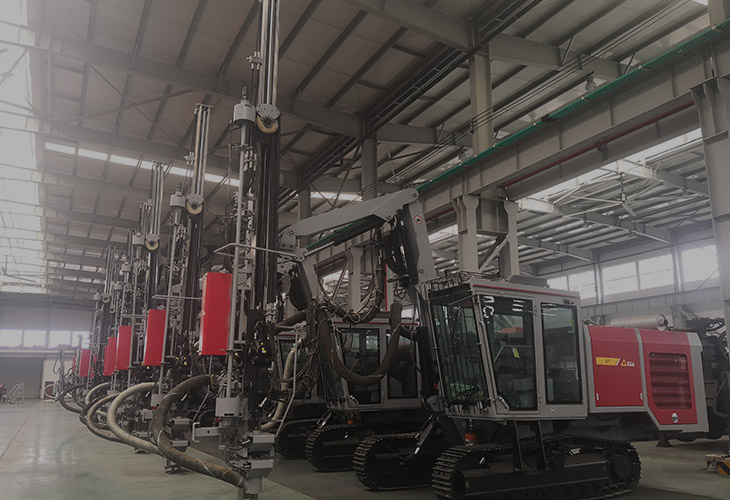
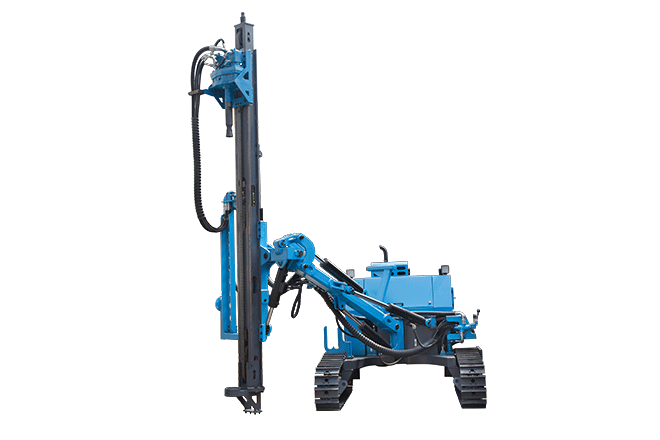
Hydraulic top - hammer drill rigs, such as the T45 full - hydraulic top - hammer surface drilling rig, are designed for more heavy - duty applications. These rigs use high - power hydraulic rock drills, like those from renowned manufacturers. They are well - suited for medium - sized open - pit mines, quarries, and areas with rock layers of medium hardness or above.The T45, for example, offers fast perforating speeds, high production efficiency, and low comprehensive fuel consumption. It also has an excellent dust removal effect, making it an environmentally friendly choice. The core components of such rigs are often sourced from internationally renowned brands, ensuring good reliability, high operating efficiency, and low energy consumption. They typically have a benchmark - matching system between the rock drill, air compressor, and engine, with an economical / powerful dual - operation mode. This provides wide adaptability to different rock formations and helps keep operating costs down. The rigs also feature a compact structure, are small and flexible, have a fast walking speed, and strong off - road capabilities. Some, like the SWDH series, even have foldable drill arms, which are suitable for multi - angle control drilling and quick drilling positioning.
Air Compressors: Powering the DTH Hammer
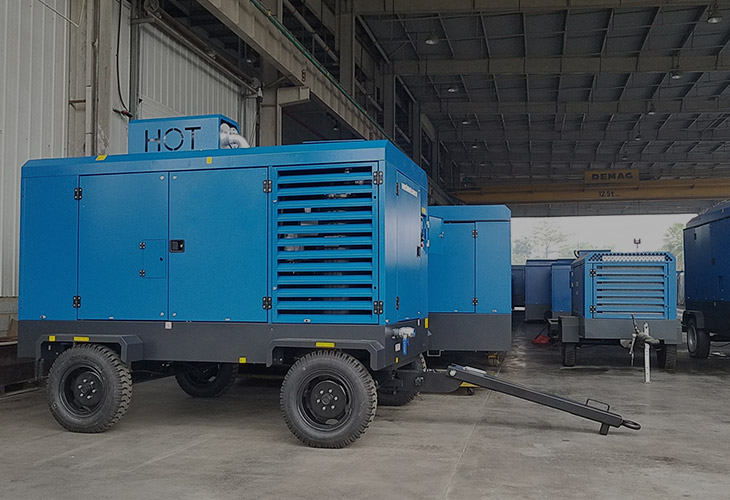
In well drilling, especially in rocky areas, an air compressor is an essential piece of equipment. Screw air compressors are commonly used. Inside the compressor, a set of male and female rotors work together to compress air. This compressed air is then sent through the outlet tunnel to the air loop system in the rig, where it powers the DTH (Down - the - Hole) hammer.Compared to traditional mud pumps, air compressors have a much higher stone - conquering ability. For instance, our S85T screw air compressor is a two - stage compression model, which offers better working efficiency. It is powered by a 228 - kw Yuchai engine, allowing it to produce a pressure of 22 bar (320 psi) and a flow of 24 m³/min (857 cfm). This makes it widely used in 200 - m well drilling projects.
Air Hoses: Connecting the System
Air hoses play a vital role in the well - drilling setup as they connect the drilling rig and the air compressor. Their primary function is to transport the compressed air from the compressor to the drilling rig. A well - maintained and properly sized air hose is essential for ensuring a continuous and stable supply of compressed air, which is crucial for the efficient operation of the DTH hammer and other pneumatic components in the drilling system.Drill Rods: Transmitting Power and Fluids
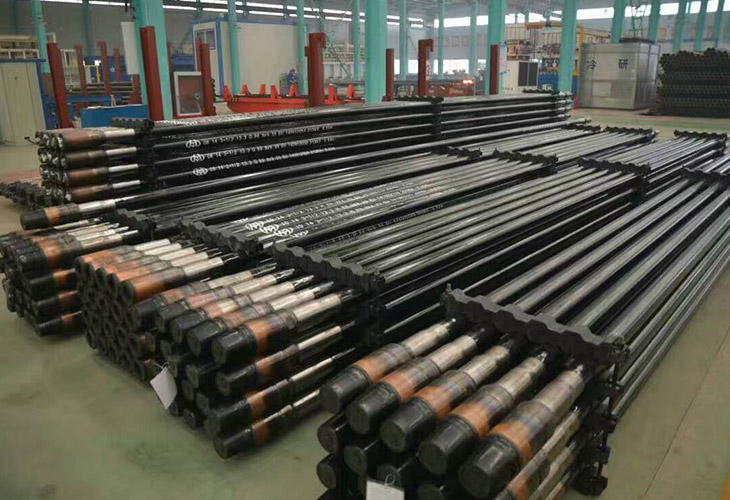
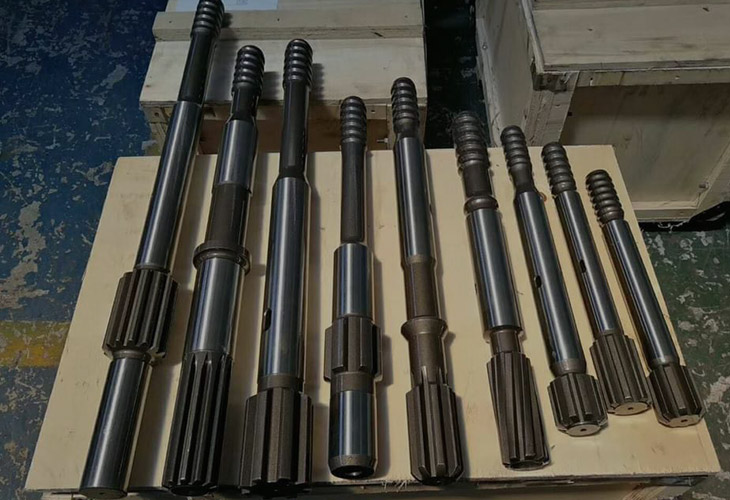
Drill rods are steel pipes with threads at the ends. They serve to connect the surface equipment of the drilling rig to the drilling and grinding equipment or the bottom - hole device, such as the DTH hammer and bits. The main purposes of drill rods are to transport the drilling mud (if used) to the drill bit and, along with the drill bit, to raise, lower, or rotate the bottom - hole device. They need to be strong enough to withstand the high pressures and torques involved in the drilling process. Different drill rod diameters and lengths are available, and the choice depends on factors such as the depth of the well, the type of rock being drilled, and the specific requirements of the drilling rig.DTH Hammers: Breaking Through Rock
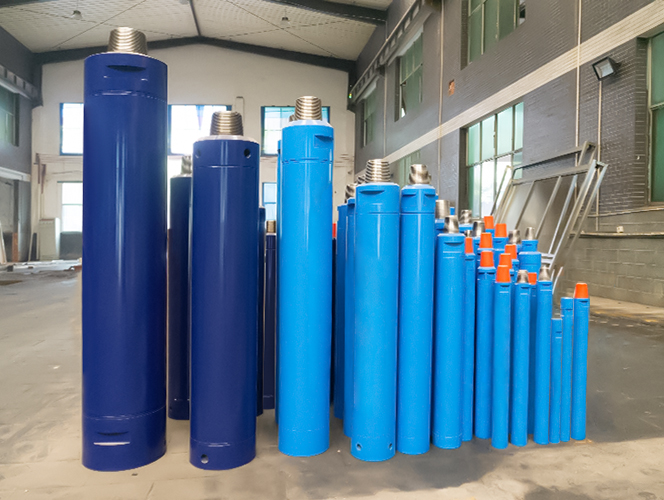
A DTH hammer, often simply called DTH by professionals, is essentially a jackhammer - like device screwed onto the bottom of a drill string. Powered by the air compressor, it delivers a fast - hammer action that breaks hard rock into small cuttings and dust. These cuttings and dust are then evacuated by air.DTH hammers are classified into three types based on pressure: low - pressure (≤ 1.0 mpa), medium - pressure (≤ 1.6 mpa), and high - pressure (1.6 - 2.2 mpa). When choosing a DTH hammer, it's important to match its pressure requirements with the rated pressure of the air compressor. For example, a 4 - inch high - pressure DTH hammer might have a frequency of 60 hz and be suitable for use with 105 - 150 mm DTH bits.
DTH Bits: The Cutting Edge
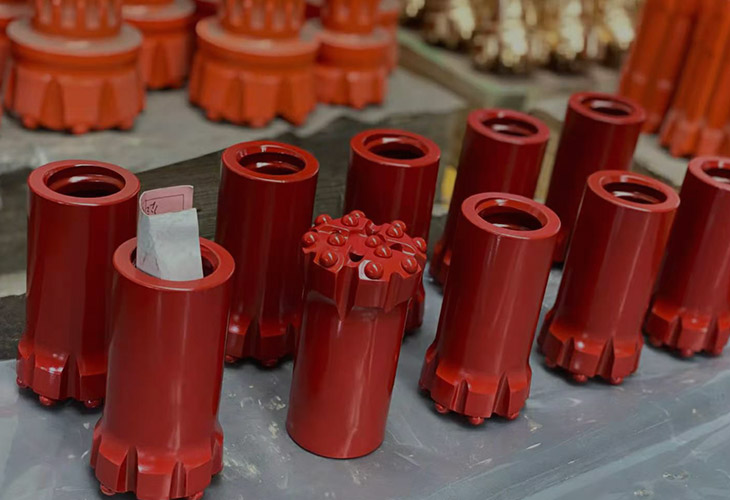
DTH hammer bits are used in conjunction with DTH hammers to drill holes through a wide range of rocks. The design and quality of the DTH bit are crucial for the drilling process. Bits are available in different sizes and configurations, and the choice depends on the type of rock, the drilling depth, and the diameter of the hole required. For harder rocks, bits with more wear - resistant materials and optimized carbide inserts are used. Some custom - made bits, as described in other scenarios, might have increased carbide content and rearranged carbide positions to better withstand the high hardness of certain rocks like quartzite..jpg)
.jpg)
.jpg)
.jpg)
.jpg)
.jpg)
Damon’s solo photo
.jpg)
.jpg)
(1).jpg)
.jpg)
Products in the live broadcast
.jpg)
.jpg)
.jpg)
.jpg)
.jpg)
Group photo
.jpg)
Conclusion
In conclusion, well drilling requires a carefully selected set of equipment. Each component, from the drilling rig to the DTH bit, plays a crucial role in the success of the operation. Understanding the functions, advantages, and how to choose the right equipment for specific drilling conditions is essential for anyone involved in the well - drilling industry. Whether it's a small - scale water well drilling project or a large - scale mining exploration, having the proper equipment can enhance efficiency, reduce costs, and ensure the safety of the drilling crew..jpg)

.png)