How to Choose the Right Mobile Light Tower for Construction and Mining Sites
Oct 26, 2026
The Evolving Landscape of Industrial Jobsite Illumination
Illumination on modern construction, infrastructure, and mining sites is no longer just about mounting floodlights on a mast. Project managers must balance lumens output, operational noise, fuel logistics, carbon emissions, and total cost of ownership (TCO). Whether powering a remote off-grid mining camp or a mid-city nighttime highway project, selecting the correct mobile light tower directly impacts both project safety and bottom-line profitability.
Key Factors to Consider When Selecting a Mobile Light Tower
1. Power Source: Solar, Plug-in Electric, or Diesel?
-
Solar-Powered Light Towers (e.g., HiLight MS 4 & MS 5): Designed for zero-emission, silent operation. Powered by efficient lithium batteries and fast-charging parallel solar panel arrays, these units eliminate fuel supply logistics and engine maintenance.
-
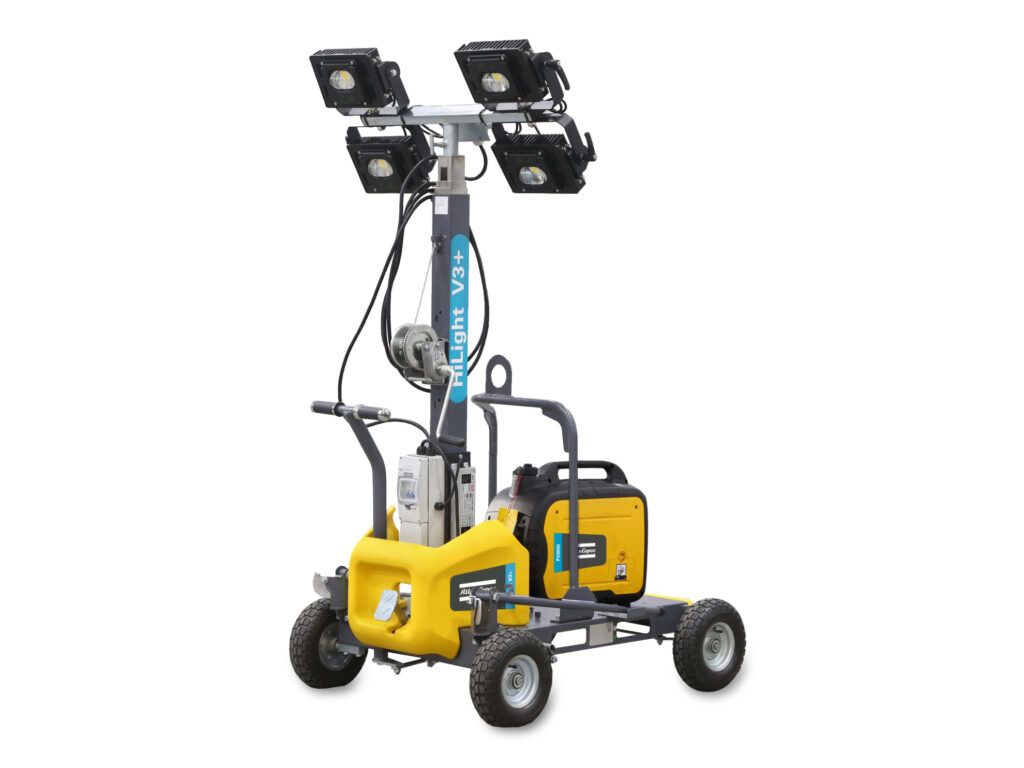
Plug-in Electric Light Towers (e.g., HiLight V3+): Ideal for jobsites with existing grid access or auxiliary power. They offer lightweight transportability, zero direct emissions, and whisper-quiet performance.
-
Diesel Generator Light Towers: Suited for heavy-duty off-grid environments where continuous fuel-driven power is required without solar reliance.
2. Lighting Coverage and Lumens Efficacy
Rather than looking only at wattage, evaluate luminous efficacy (Lm/W) and total light coverage (m²) at standard LUX levels:
-
Mid-Scale Sites (3,000 – 4,000 m²): Units like the HiLight MS 4 generate up to 102,600 lumens to cover 3,846 m², offering 11 hours of standard runtime.
-
Large-Scale Sites (5,000+ m²): High-output units like the HiLight MS 5 deliver up to 136,800 lumens covering 5,278 m² for expansive mining or excavation fields.
3. Recharging Speed and Autonomous Run Time
For solar units, recharging efficiency is critical. Second-generation parallel solar panels can achieve a full recharge in under 2.6 hours during peak sunlight. Additionally, smart ECO controllers with integrated dimming functions can extend total autonomous runtime up to 85 hours, guaranteeing continuous light during multi-day overcast weather.
4. Environmental Durability & Site Mobility
Equipment deployed in extreme sectors must function reliably without power derating:
-
Operating Temperatures: Look for certified performance across -20°C to +50°C.
-
Wind Resistance Rating: Structural masts should maintain stability in winds up to 110 km/h.
-
Transport Dimensions: Compact folded dimensions (e.g., 2.29 × 1.12 × 2.68 m) allow more units per truckload, reducing transport logistics costs.
Conclusion: Choosing the Best Option for Your Fleet
To maximize ROI, rental companies and contractors should transition toward high-efficiency LED solar and electric lighting masts wherever zero-emission or silent operation is mandated. Investing in low-maintenance, fuel-independent lighting solutions reduces lifetime servicing overheads while improving compliance with modern environmental standards.

.jpg)